
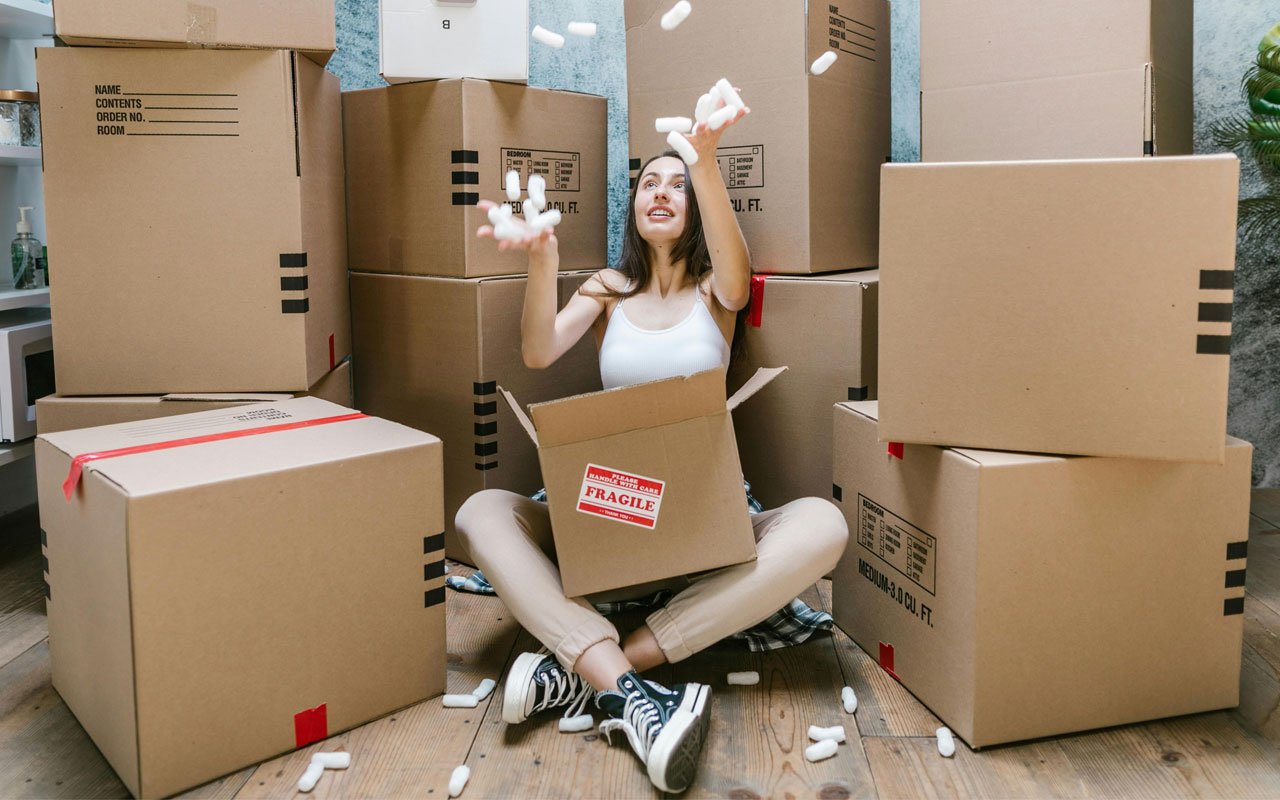



Most broken dishes and cracked glassware don’t happen from a dropped box: they happen from items shifting and knocking into each other during transport. Knowing how to pack fragile items safely means understanding what most people get wrong: not enough cushioning inside the item itself, and too much empty space left inside the box.
| Item Type | Best Material | Box Type |
|---|---|---|
| Plates and china | Packing paper, wrapped diagonally | Dish pack or double-walled box |
| Glasses and stemware | Packing paper + bubble wrap on stems | Divided box or cell kit |
| Vases and figurines | Packing paper stuffed inside, then bubble wrap outer layer | Standard box with cushioning |
| Lamps and lampshades | Bubble wrap on base, packing paper inside shades | Separate boxes for base and shade |
| Electronics (TVs, monitors) | Bubble wrap, original packaging if available | Snug-fitting box, upright position |
| Mirrors and framed art | Bubble wrap + cardboard corner protectors | Flat mirror/picture box |
How Do You Pack Dishes and Glassware for Moving?
Wrap each plate individually with two to three layers of packing paper, tucking the edges in diagonally so nothing slips loose in transit. Pack plates on their sides rather than stacked flat: stacking flat concentrates weight in a way that cracks dishes more easily, while packing them like a dish rack spreads the pressure evenly.
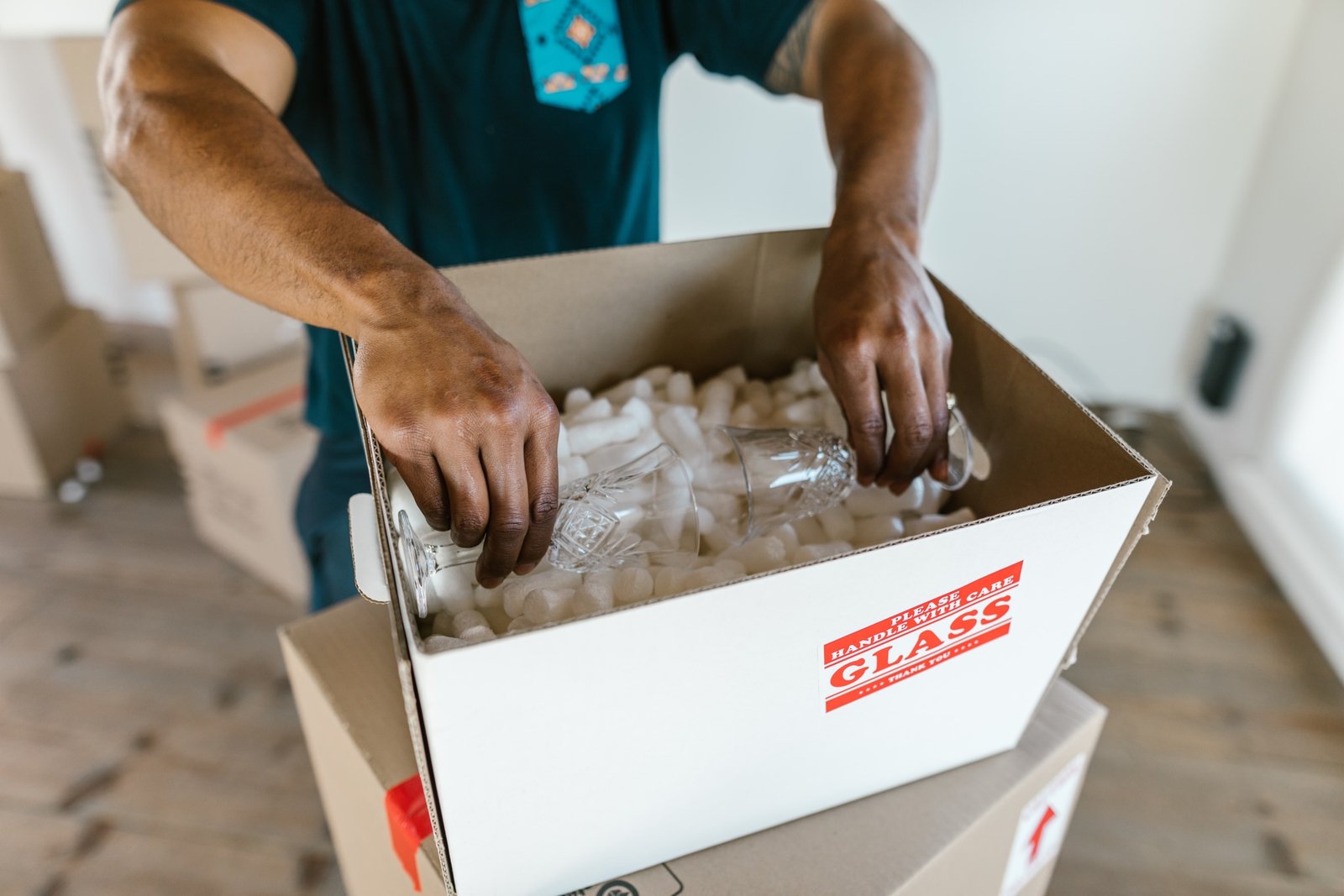
Glassware needs more attention than plates because it’s more prone to chipping. Stuff a small piece of packing paper inside each glass before wrapping the outside, since an empty glass is more likely to collapse inward under pressure. Once wrapped, glasses should stand upright in the box rather than lying on their sides, and a divided box or cardboard cell kit keeps each piece from knocking into its neighbor.
What Is the Best Way to Pack Fragile Items So Nothing Shifts?
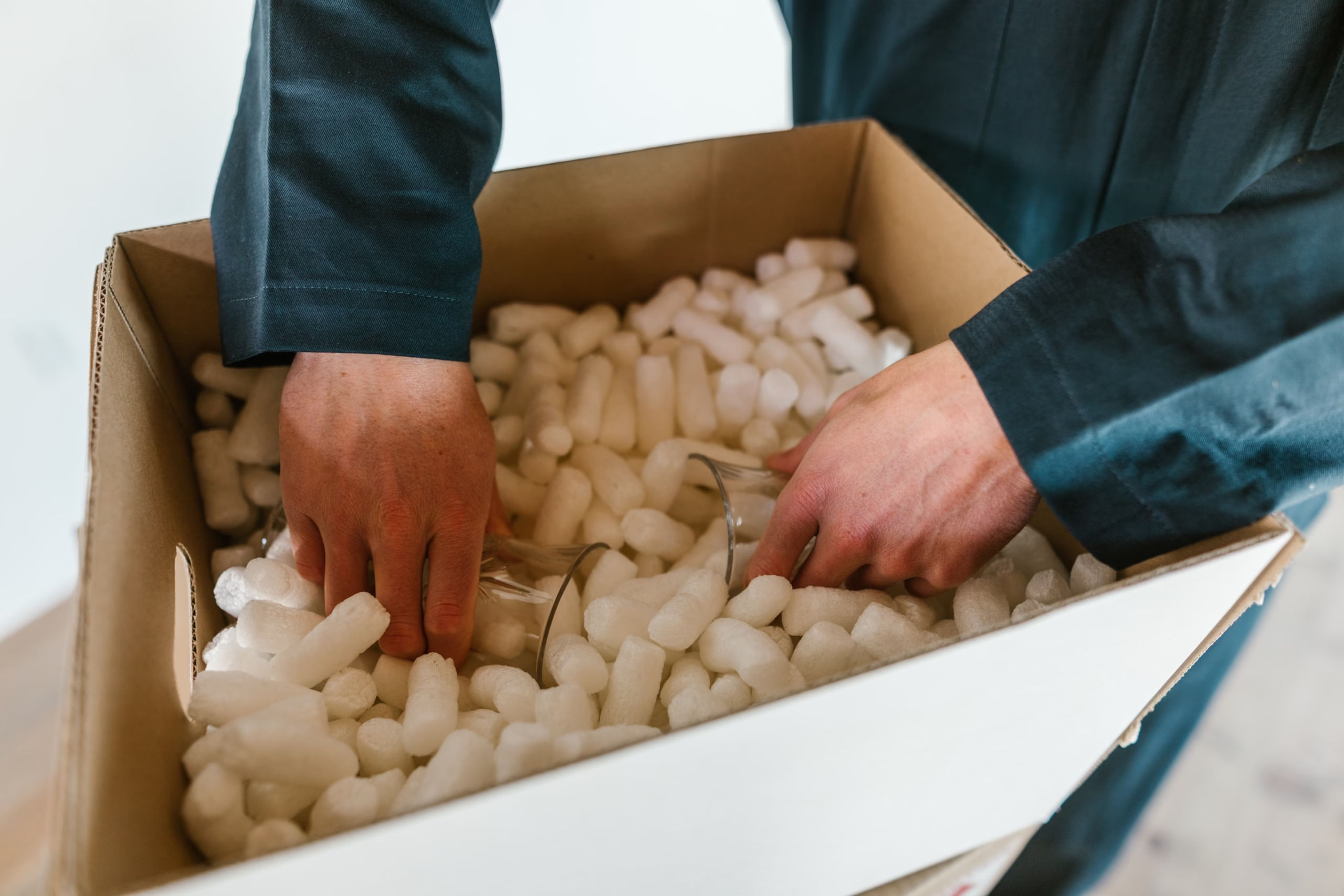
The best way to pack fragile items comes down to one principle: eliminate empty space inside the box. Line the bottom of every box with a cushioning layer of crumpled packing paper before adding anything else, then fill every gap between items with more paper, bubble wrap, or soft items like towels and clean socks.
Heavier fragile items should go at the bottom of the box, with lighter ones on top: a heavy vase sitting on top of stacked wine glasses is a common way boxes arrive with broken contents. Before sealing any box, do a gentle shake test: if you feel or hear anything shifting inside, open it back up and add more cushioning material until it’s completely snug.
How Do You Pack Fragile Items When Moving Electronics?
Fragile items when moving aren’t limited to glass and china: TVs, monitors, and computer towers need their own approach. Whenever possible, pack electronics in their original manufacturer boxes, since those are built to the exact dimensions and weight of the device. Without original packaging, wrap the item in several layers of bubble wrap, making sure screens and corners are fully covered, and choose a box that fits snugly rather than one with excess room to shift.
Back up important data and remove any discs, flash drives, or accessories before packing a computer, and always pack the tower or monitor upright rather than flat. Static-sensitive components benefit from bubble wrap’s anti-static properties, which is part of why it’s preferred over packing peanuts for electronics specifically. Our local movers in Fort Worth TX are trained to load fragile boxes last and unload them first, so they spend the least time buried under heavier furniture.

Should You Pack Fragile Items Yourself or Hire Movers?
Packing a handful of fragile items yourself is manageable with the right materials and a little patience, but packing an entire household of glassware, electronics, and sentimental pieces is where most DIY moves run into trouble: usually from rushing the last few boxes the night before moving day. It’s also worth knowing that under standard federal moving liability rules, basic coverage reimburses damaged items at a set rate per pound rather than their actual value, which is one more reason fragile, high-value items deserve extra care during packing.
PiggyBack Premium Moving DFW packing services Fort Worth residents rely on include the dish packs, dividers, and trained hands to get fragile items wrapped correctly the first time, whether you need help with one room or the whole house.
If you’re already booking a full move, pairing professional packing with our residential movers Fort Worth team means fragile boxes are also loaded and unloaded by the same crew that packed them, reducing the number of hands your breakables pass through.
START PACKING with confidence
Knowing how to pack fragile items safely comes down to eliminating empty space, choosing the right materials for each item type, and never rushing the last few boxes before moving day. PiggyBack Premium Moving DFW brings that same care to every Fort Worth move, whether you need packing help for one room or a full house. Get your free packing and moving quote today and let our team handle your fragile items with the attention they deserve.


